Shop by Vehicle
 Track Order
 Contact Us

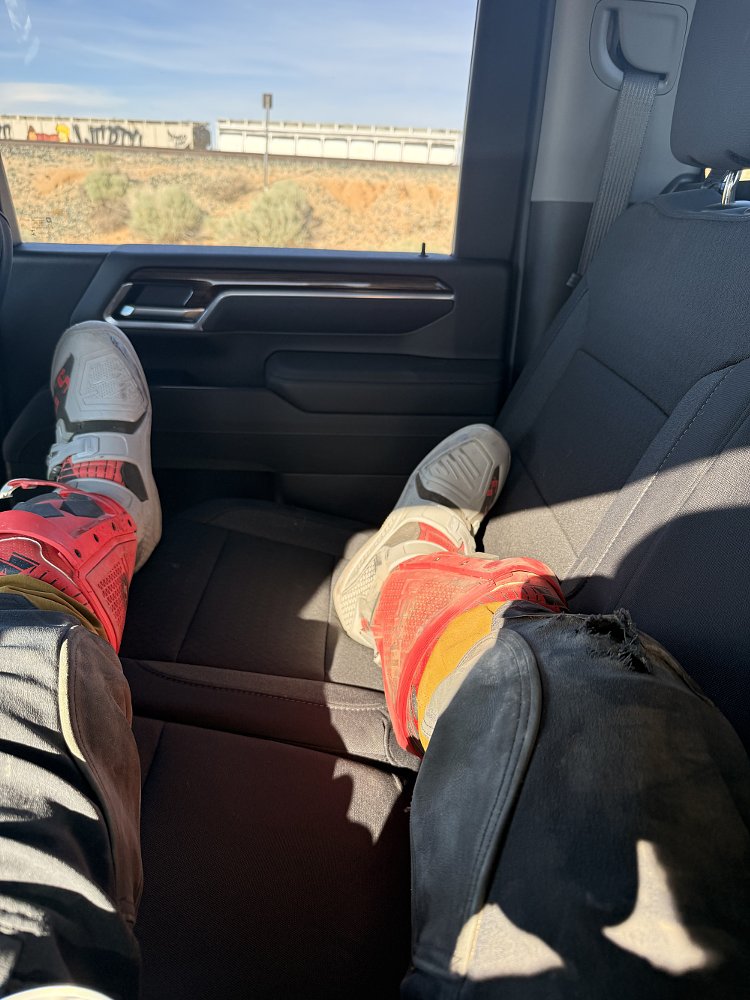
Four months of training, on and off the bike for the event I'd had circled on the calendar for a year: The Biltwell 100. I had finished setting up camp and linked up with a couple of friends for a shakedown ride the day before the race. Fully geared up with my new Leatt helmet and neck brace, Forcefield chest, back, and shoulder protectors, Leatt knee guards, and the Leatt 5.5 FlexLock Enduro boots.
I felt ready and everything was great. Until it wasn't.
I had recently raised my rear brake pedal for better reach while standing in the attack position. Going into an easy, if slightly fast, turn, I locked up the rear wheel. The back end slid out. I went down hard, most of my right side meeting the dirt, the bike briefly on top of my lower leg before it settled into a pile of sand.

I work as a physical therapist in an acute inpatient setting (think intensive care and intermediate care, which is a step up from a regular hospital room). The second the bike slammed into my leg, I knew this wasn't something I'd walk off. I stayed down. When my friends reached me, I told them clearly: My leg is broken. A few calls, a truck ride to the Emergency Room, and some imaging confirmed it.

The gear
I'd never felt more protected and confident in my gear than I did that day.
The Leatt 5.5s were a big upgrade from the entry-level motocross boots they replaced — boots that had served their time and needed retirement. Quality has a feel, and I noticed it the first time I put these on, and every time after: better buckles, ankle support that was plush and supportive at once, stiffness that felt genuinely protective.
I'll be honest about how I got there, too. Before I researched the boots, what pointed me toward them was watching Chris Birch ride in a pair. A few YouTube reviews later — pro-level performance, exceptional comfort, serious protection — and I was sold. (No affiliation here, for what it's worth. Just what I wear.)
A pattern I've been guilty of more than once, and not just with boots: buying what I could afford in the moment rather than what actually made me feel protected, because between gear and bike parts there's always a laundry list and a budget that doesn't stretch to cover it. The 5.5s were the first time I closed that gap; the helmet and neck brace followed.
The limits of gear, the laws of physics
After the dust settled, I realized even the best gear has a ceiling.
The physics: A 500-pound bike, carried by its own momentum, came down on my lower leg, which was in contact with the ground. That's not a static weight sitting on a limb, it's mass in motion, and motion has to go somewhere when it stops suddenly. Some of that force transferred straight down as crushing weight. Some of it twisted through the ankle and foot as the bike settled and rotated off my leg. The result: multiple ankle and foot fractures, torn ligaments, and a fibula fracture.
A boot is built to resist a specific range of forces: direct impact, some rotation, some crush. Within that range, it does real work, similar to how a seatbelt does real work across a wide range of crashes. It's often the difference between a hospital visit and walking away from a crash. But there's a threshold of force past which even a seatbelt is managing the outcome, not preventing it. The circumstances of my crash surpassed that threshold.
It's worth sitting with what that boot likely did prevent. I've treated the injuries that happen when a limb gets crushed or twisted with nothing rigid protecting it, the kind of trauma that goes beyond fracture into crush injury, or worse. I believe once my crash crossed the tipping point where a fracture became likely no matter what, the boot's job shifted: not to overcome physics and prevent an injury, but to keep what was already happening from becoming something far worse.
I try not to think too hard about what that crash would have looked like in my old, worn-out, entry-level boots. But I think about it enough to know the answer isn't "the same injury." It's a far worse one.
What the lesson from all this about gear?
Not: Gear doesn't matter, so don't bother. That's the wrong lesson, and it's a dangerous one.
The real lesson is closer to this: Good gear buys you a higher ceiling. It raises the level of force you can sustain and walk away from. It does not make you immune above that level, and it was never going to. Once you've bought the right gear — gear that protects you without limiting your ability to actually control the bike — the rest of the job is still yours. Skill. Judgment. Reading terrain. Managing speed. Staying current on all four, and staying honest with yourself about whether you actually are.
Good gear and good skill aren't a checklist you complete once. They're both things you have to keep maintaining, the same way you maintain the bike itself. I had the gear right that day. I thought I had full control of that turn, but that last-minute mechanical adjustment of the rear brake pedal changed the equation.
I'm still on crutches as I write this, completely non-weight-bearing, and I already miss riding more than I expected. I miss how present I'm forced to be when I'm on the bike. I miss riding difficult terrain, and how it quiets my mind.
The boots survived. The leather connector piece between the two sides got cut open at the ER, which is the only damage. I'm grateful I had them on that day and I'd wear the same pair again tomorrow if I could stand on the leg.
The boots did their job that day. I didn't.
Image Gallery